
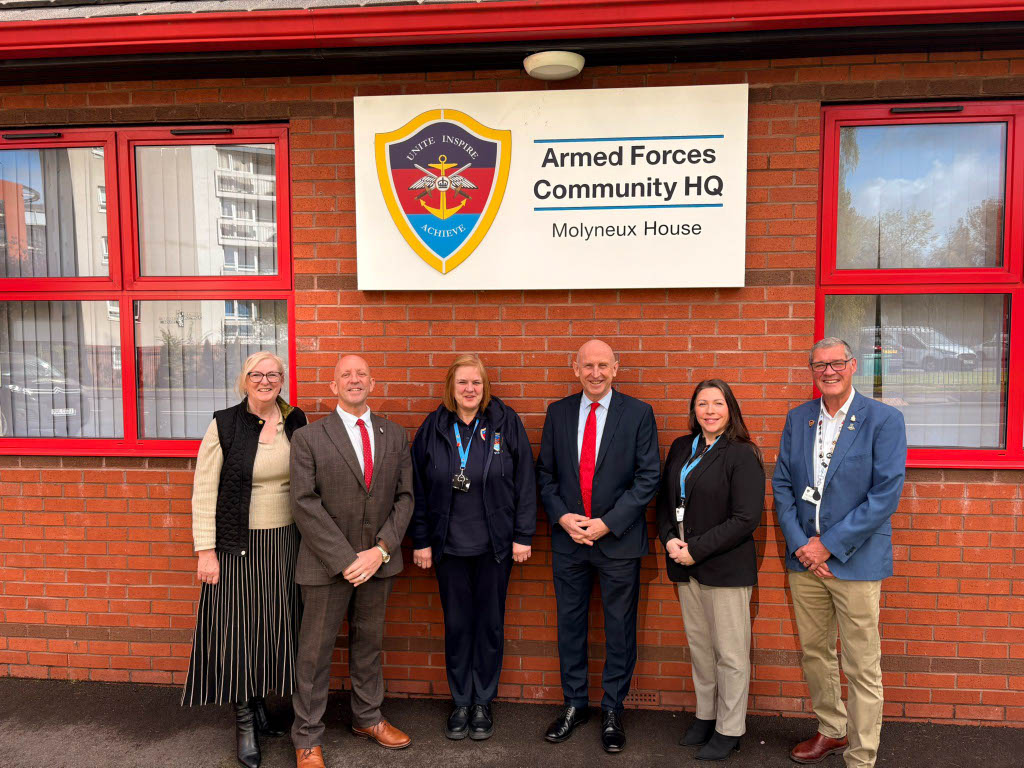
The Defence Secretary joined Greater Manchester Mayor Andy Burnham on a visit to Molyneux House in Wigan, home to Armed Forces Community HQ (AFCHQ), to see first-hand the support being delivered for veterans and Armed Forces families across the region.
The visit highlighted the growing recognition of the Wigan-based hub as a leading example of joined-up, community-based veteran support, bringing together services, organisations and professionals under one roof to help veterans rebuild stability, connection and purpose after service.
During the visit, the Defence Secretary and Mayor met with veterans, staff and volunteers, hearing directly about the challenges many in the Armed Forces community face during transition into civilian life, including housing insecurity, mental health struggles, employment barriers and social isolation.
A National Example of Veteran Support
Molyneux House, home to AFCHQ, forms part of a wider network of government-backed veteran support centres designed to act as a single point of contact for veterans and their families.
The model focuses on delivering practical, accessible and person-centred support, helping individuals navigate services while reducing the fragmentation that veterans can often experience when trying to access help.
By bringing multiple services together in one place, AFCHQ supports veterans with:
- Mental health and wellbeing
- Housing and homelessness support
- Employment and training pathways
- Financial guidance
- Social connection and community integration
The visit reinforced how collaborative approaches like this are becoming increasingly important in delivering effective, long-term support for the Armed Forces community.
Tackling Veteran Homelessness
A key focus of the visit was the issue of veteran homelessness.
During the visit, Andy Burnham reinforced Greater Manchester’s commitment to ensuring that no veteran is left without support, highlighting that veterans experiencing homelessness would receive faster access to the region’s “Bed Every Night” programme, which provides emergency accommodation and pathways into longer-term housing.
Speaking during the visit, Burnham said:
“Nobody who served our country… should ever be sleeping rough.”
He also acknowledged that more work is still needed to strengthen support provision and improve outcomes for veterans across Greater Manchester and beyond.
Recognition Through VALOUR
The visit comes at an important moment for AFCHQ, following confirmation that the organisation will lead one of the UK’s first VALOUR-recognised centre networks, backed by significant Ministry of Defence investment.
This recognition reflects the organisation’s growing role in shaping how veteran support is delivered both regionally and nationally.
Laura Ingham, Managing Director at AFCHQ, said:
“We are incredibly proud to be named as one of the first VALOUR-recognised centres. This recognition is a real testament to the hard work, passion and unwavering dedication of our entire team, who go above and beyond every day to support our Armed Forces community.
We are committed to delivering meaningful, joined-up support that meets people where they are and helps them rebuild their lives with dignity and purpose.”
The Importance of Partnership Working
The visit also reinforced the importance of partnership working between government, local authorities, VCSE organisations and community networks in supporting veterans effectively.
This collaborative approach sits at the heart of the Forces Wellbeing Collective, where organisations across sectors work together to strengthen pathways, reduce duplication and improve outcomes for veterans, serving personnel and their families.
As demand for veteran support continues to grow, visits like this shine a spotlight not only on the challenges that remain, but on what is possible when organisations work together around shared goals.
Looking Ahead
The visit to Molyneux House demonstrated that Greater Manchester is continuing to position itself as a leading region for veteran support, focused not only on crisis intervention, but on creating systems that help people live well long-term.
With increased national attention, growing partnership working and investment through programmes like VALOUR, the foundations are being built for a more connected and responsive support system for the Armed Forces community.
Better > Stronger > Together.